Frame the Change LAB
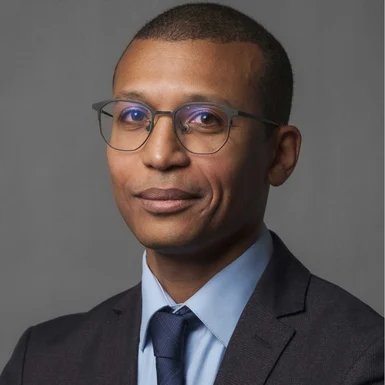
Dr. Amine Amar
Co-Founder · Frame the Change LAB

Dr. Amine Amar

Co-Founder & Chief Evidence Officer

Statistician and learning scientist working on research methods, formative assessment, and how learning can be measured with precision.

Based inIfrane, Morocco
AlsoAssociate Professor of Applied Mathematics and Data Science, Al Akhawayn University
EducationDoctorate in Statistics, Mohammed V University, Rabat
LanguagesArabic, French, English
Applied statisticsData science and machine learningResearch methodologyFormative assessmentLearning progressionsEconometricsExtreme value and risk modelingAdaptive learning

About Amine

Dr. Amine Amar is Co-Founder and Chief Evidence Officer at Frame the Change LAB. A learning scientist and statistician, he brings deep expertise in research methodologies, formative assessment, learning progression, and data analysis in education. He is a Fellow with the Childhood and AI Lab Research Fellowship and teaches at Al Akhawayn University in Ifrane, Morocco.

As Principal Investigator, his research examines how learners move through structured knowledge, how that movement can be measured with precision, and what it means for an AI tool to genuinely support understanding rather than simulate it. He is currently piloting Fikira in his classroom, building the foundational evidence the team needs to build with confidence.

At Al Akhawayn University he is Associate Professor of Applied Mathematics and Data Science in the School of Science and Engineering, where he also coordinates internships and capstone projects. Before joining the university in 2021, he led the network of meteorological stations at Masen, the Moroccan Agency for Sustainable Energy, and earlier worked as a statistician engineer at the High Commission for Planning, where he headed the foreign trade index unit and served as national coordinator for statistics quality.

He holds a doctorate in statistics and applied mathematics and a master’s degree in mathematics and statistics from Mohammed V University in Rabat, and an engineering diploma in operations research from the National Institute of Statistics and Applied Economics (INSEA).

Current projects

Active · Through December 31, 2026

Structured AI study companions in higher education: A design-based research study of the Fikira framework at Al Akhawayn University

Pilots Fikira in two School of Science and Engineering courses, Statistical Analysis and Engineering Stochastic Processes, to study whether structured, course-first use of AI improves students’ metacognitive engagement, confidence and responsible use of AI compared with unstructured use. The study will also produce a tested implementation guide that instructors can follow without technical expertise.

RolePrincipal Investigator
FunderPresident’s Innovation Fund, AI for Teaching and Learning Innovation, Al Akhawayn University
TeamDr. Amine Amar (Principal Investigator) and Dr. Jeffrey B. Matu (Co-Principal Investigator)
In progress · Book chapter

Rethinking Precision Education Through Low-Resource AI and Digital Equity in Technical and Vocational Education

A chapter for an edited volume of the UNESCO Regional Center for Educational Planning (RCEP). It defines precision education for vocational settings, asks what that takes in low-resource conditions, and compares Maryland and Morocco to show how policy commitments to individual progress meet the instruments that actually measure it.

RoleCo-author
PublisherUNESCO Regional Center for Educational Planning (RCEP), Sharjah
AuthorsJeffrey B. Matu and Amine Amar

In the classroom

Amine’s Fall 2026 courses in the School of Science and Engineering at Al Akhawayn University. Two of them are where the President’s Innovation Fund study pilots Fikira with students.

CSC 4351Fall 2026

Statistical Analysis

Al Akhawayn University, School of Science and Engineering
CSC 5341Fall 2026

Inferential Statistics

Al Akhawayn University, School of Science and Engineering
Course coordinator
EGR 4394Fall 2026

Engineering Stochastic Processes

Al Akhawayn University, School of Science and Engineering
Fikira pilot courseCourse coordinator

Published work (32)

Journal articles 16

  • 2026Amazigh, M., Oussar, A., Amar, A., El Hannoun, W., Jbilou, J., & El Adlouni, S.-E. (2026). The effects of climate change and population dynamics on New Brunswick’s energy demand. Environmental Research Letters, 21, 154022. Read ↗
  • 2025El Fallah, K., Amar, A., Mayad, E. H., El Kettabi, Z., Maqas, M., & Charafi, J. (2025). Ecological suitability modeling of sweet cherry (Prunus avium L.) in the Fez-Meknes region of Morocco under current climate conditions. Sustainability, 17(23), 10573. Read ↗
  • 2025Rouegui, M., Bellabair, H., El Asli, A., Amar, A., Zoerner, W., Rachidi, F., & Lghoul, R. (2025). Bio-methanization of sheep manure and beet waste in the Meknes–Fès region, Morocco: Effects of pretreatment and machine learning applications for biochemical methane potential prediction. Recycling, 10(6), 213. Read ↗
  • 2024Taam, A., Amar, A., Hmedna, B., Benabbes, K., Kaoutar, E. M., Daoudi, R., & El Makrani, A. (2024). Exploration of the relationships between the information and communication technology (ICT) and the education system in Morocco. Scientific African, 26, e02447. Read ↗
  • 2024Taik, F. Z., El Mansouri, N., Bensaid, R., Adnine, A., Amar, A., Fourtassi, M., & Abourazzak, F. E. (2024). Beliefs of Moroccan patients with chronic inflammatory rheumatic diseases regarding medication: Related factors and correlation with therapeutic adherence. BMC Rheumatology, 8(1), 45. Read ↗
  • 2024Taik, F. Z., Bensaid, R., Adnine, A., El Mansouri, N., Aharrane, F. Z., Amar, A., Fourtassi, M., & Abourazzak, F. E. (2024). Use of social media as a source of health information among patients with chronic low back pain. Musculoskeletal Care, 22(1), e1846. Read ↗
  • 2023Taik, F. Z., Adnine, A., Tbatou, H., Amar, A., & Abourazzak, F. E. (2023). Would you consider becoming a rheumatologist? A survey regarding the attractiveness of rheumatology as a career among Moroccan medical students. Mediterranean Journal of Rheumatology, 34(3), 349–355. Read ↗
  • 2022El Hannoun, W., Zoglat, A., Badaoui, F., & Amar, A. (2022). Detection and forecast of climate change effect on siltation using copulas. Theoretical and Applied Climatology, 148(3–4), 1615–1627. Read ↗
  • 2018El Wahli, I., Amar, A., & Laaroussi, Y. (2018). Efficiency classification of stock market indices: Construction of an indicator using fractal and long memory characterization. Journal of Applied Economic Sciences, 13(5).
  • 2017Badaoui, F., Amar, A., Ait Hassou, L., Zoglat, A., & Okou, C. G. (2017). Dimensionality reduction and class prediction algorithm with application to microarray big data. Journal of Big Data, 4(1), 32. Read ↗
  • 2017Badaoui, F., Amar, A., Okou, C. G., Zoglat, A., & El Adlouni, S. (2017). Reliable estimation of capital requirement for banking sector using peak over threshold approach. International Journal of Applied Mathematics and Statistics, 56(4), 21–37.
  • 2016Amar, A., El Wahli, I., Guennoun, Z. E., & Laaroussi, Y. (2016). Fractal analysis of Moroccan dirham exchange rate: Theory and comparative results. Journal of Applied Economic Sciences, 11(3).
  • 2015Laaroussi, Y., Guennoun, Z. E., & Amar, A. (2015). Extreme values theory for dynamical systems: Analysis of stability behavior in delayed Kaldor-Kalecki model. International Journal of Mathematical Analysis, 9(43), 2139–2155.
  • 2015Laaroussi, Y., Guennoun, Z. E., & Amar, A. (2015). New hybrid method to model extreme rainfalls. International Journal of Environmental, Chemical, Ecological, Geological and Geophysical Engineering.
  • 2014Zoglat, A., El Adlouni, S., Badaoui, F., Amar, A., & Okou, C. G. (2014). Managing hydrological risks with extreme modeling: Application of peaks over threshold model to the Loukkos watershed, Morocco. Journal of Hydrologic Engineering, 19(9), 05014010. Read ↗
  • 2012Amine, A., & Guennoun, Z. E. (2012). Contribution of wavelet transformation and empirical mode decomposition to measurement of US core inflation. Applied Mathematical Sciences, 6(135), 6739–6752.

Book chapters 3

  • 2025Amar, A. (2025). Feeding the world with innovative education: Enhancing agritech and agrifintech focused curricula to address food security challenges. In N. A. Bakhsh (Ed.), Education for global challenges: Preparing learners for a complex world (pp. 69–95). UNESCO Regional Center for Educational Planning. Read ↗
  • 2021El Mahmah, A., & Amar, A. (2021). Food security in the MENA region: Does agriculture performance matter? In Emerging challenges to food production and security in Asia, Middle East, and Africa (pp. 101–125). Springer. Read ↗
  • 2018Amar, A. (2018). Building socio-ecological coviability: An efficient way to combat poverty, reduce inequality and address insecurity risks. In Human and environmental security in the era of global risks (pp. 65–86). Springer. Read ↗

Conference proceedings 12

  • 2026Baqqass, S., El Khamlichi, S., Bensaoud, I., & Amar, A. (2026). Forecasting daily high-speed rail demand for sustainable and low-carbon mobility. Materials Research Proceedings. Materials Research Forum. Read ↗
  • 2026Taam, A., Amar, A., Hmedna, B., Benabbes, K., Kaoutar, E. M., & El Makrani, A. (2026). Use of CatBoost algorithm to enhance the prediction of the learner performance in MOOCs. In Lecture Notes in Networks and Systems (pp. 229–242). Springer. Read ↗
  • 2025Taam, A., Amar, A., & El Makrani, A. (2025). A data-driven machine learning approach to assessing professors’ digital maturity in Moroccan higher education. In 2025 4th International Conference on Embedded Systems and Artificial Intelligence (ESAI) (pp. 1–6). IEEE. Read ↗
  • 2025Fadili, M., Amar, A., & Zine, R. (2025). MetaDAG: Bridging sustainable supply chains from BlockDAG to the metaverse through agent-based modeling. In Lecture Notes in Networks and Systems (pp. 237–246). Springer. Read ↗
  • 2023Taam, A., Amar, A., Kheraz, S., Adnane, A., & Ait Lahcen, A. (2023). Effectiveness of e-learning strategies in Morocco during the COVID-19: Highlights from statistical association and categorical fuzzy k-modes clustering. In E-Learning and Smart Engineering Systems (ELSES 2023) (pp. 373–386). Atlantis Press. Read ↗
  • 2023Abdoun, M., Guennoun, M., Amar, A., Saad, T., & Taha, M. (2023). Efficient BGP intrusion detection model using machine learning: A comparative study with AdaBoost as the optimal classifier. In 2023 IEEE Canadian Conference on Electrical and Computer Engineering (CCECE) (pp. 399–404). IEEE. Read ↗
  • 2023Okou, G. C., & Amar, A. (2023). Modeling contagion of financial markets: A GARCH-EVT copula approach. Engineering Proceedings, 39(1), 70. Read ↗
  • 2023Badaoui, F., Bouhout, S., Amar, A., & Khomsi, K. (2023). Modelling of leishmaniasis infection dynamics: A comparative time series analysis with VAR, VECM, generalized linear and Markov switching models. Engineering Proceedings, 39(1), 38. Read ↗
  • 2019Zoglat, A., Amar, A., Badaoui, F., & Ait Hassou, L. (2019). A copulas approach for forecasting the rainfall. In Advances in Intelligent Systems and Computing (pp. 236–244). Springer. Read ↗
  • 2018El-Khchine, R., Amar, A., Guennoun, Z. E., Bensouda, C., & Laaroussi, Y. (2018). Machine learning for supply chain’s big data: State of the art and application to social networks’ data. MATEC Web of Conferences, 200, 00015. Read ↗
  • 2018Ait Hassou, L., Badaoui, F., Okou, G. C., Amar, A., Zoglat, A., & Ezzahid, E. (2018). Copulas for modeling the relationship between inflation and the exchange rate. In Contributions to Statistics (pp. 217–228). Springer. Read ↗
  • 2017Bouhamidi, M. H., & Amar, A. (2017). Data quality analysis for a smart solar resource assessment. In 2017 International Renewable and Sustainable Energy Conference (IRSEC) (pp. 1–5). IEEE. Read ↗

Working papers 1

  • 2024Amar, A. (2024). Integration of industry-relevant skills: Focus on AICP design model and work-based learning. UNESCO Regional Center for Educational Planning, Knowledge Corner. Read ↗

Published work only, compiled from Dr. Amar’s Google Scholar profile and checked against publisher records. Conference abstracts, preprints and presentations are not listed.

More from the team